CASE STUDY
Building a Topical Map to Boost SEO Visibility for Jarixo
How a 10-pillar topical authority framework turned an 11-SKU wellness catalog into a structured content and internal-linking system built for organic search growth.
1Overview
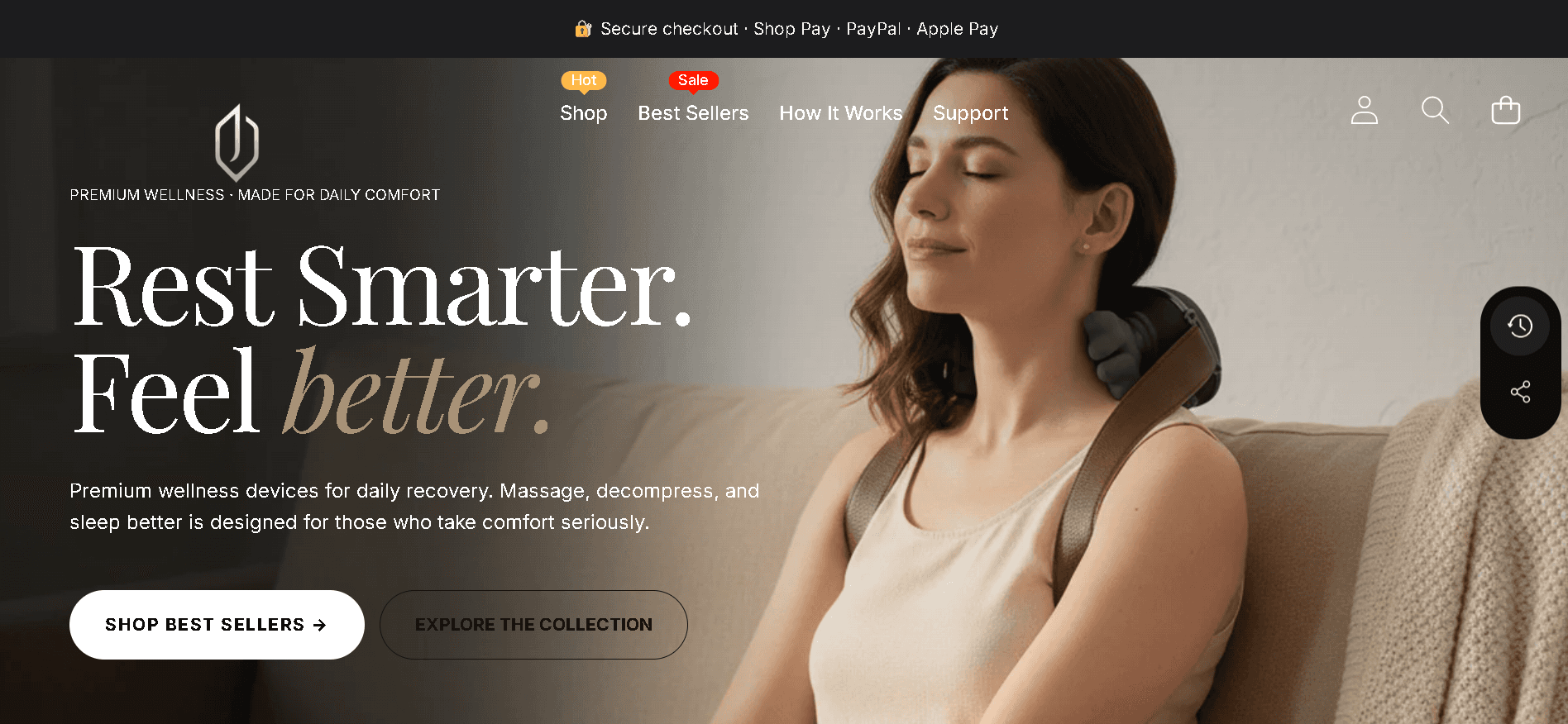
Jarixo is a direct-to-consumer wellness brand selling at-home, device-based relief products - neck massagers, back massagers, knee massagers, hand massagers, eye massagers, massage guns, and travel/sleep pillows. The brand had 11 live products and a set of Shopify collection pages, but no content strategy connecting them: no blog, no internal linking system, and no defined search intent per product category.
The goal was to design a complete topical map that could carry Jarixo's SEO visibility from a flat product catalog to a structured content authority around “at-home muscle, joint & body wellness devices,” using the Koray Tuğberk Gübür Topical Authority Framework as the underlying methodology.
2The Challenge
3Methodology: The Topical Authority Framework
The map was built top-down, following the framework's core sequence: define the central entity, then the brand's unique source context, then the central search intent, and only after that, break the space into pillars. This ordering keeps every downstream page - pillar, collection, or cluster article - tied back to one coherent entity rather than drifting into generic medical content.
Central Entity
“At-Home Muscle, Joint & Body Wellness Devices” - every product, collection, and article had to connect back to this single entity.
Source Context
Jarixo was framed consistently as a DTC brand offering practical, device-based, drug-free relief for people who can't or don't want to visit a clinic - desk workers, travelers, athletes, seniors. This context was deliberately kept “at-home, device-based, non-clinical relief” in every piece, never medical treatment or diagnosis, so Google and readers read Jarixo as an authority on relief devices rather than a generic health publisher.
Central Search Intent
People experiencing pain, tension, or discomfort in a specific body area (neck, back, knees, hands, eyes) researching causes, relief methods, and device-based solutions - spanning informational queries like “why does my neck hurt” through to commercial queries like “best neck massager.”
4The 10 Pillars
The central entity was broken into 10 main topics - 9 core body-area/use-case pillars plus one cross-pillar bridge for gifting - each mapped to its own Shopify collection:
5Content Hierarchy: Three Layers, Not Two
A key design decision was splitting what most maps treat as a single layer into three, specifically to stop the blog and the store from competing with each other:
6Fixing the Original Draft
This version corrected five specific gaps found in an earlier draft of the map:
7The Topical Matrix
Each pillar was run across the same 11 content attributes/angles, so every row of the matrix produces a full slate of article ideas for that body area - and empty cells are left intentionally empty rather than force-fitting a topic that has no natural search intent (for example, some pillars have no “Symptoms & Self-Check” or “When to See a Doctor” entry because it isn't a natural fit).
Attribute columns used across all 10 pillars:
A. What Is • B. Causes • C. Symptoms • D. Home Remedies • E. Comparison • F. Buying Guide • G. How-To • H. Myths vs Facts • I. For Audience • J. See a Doctor • K. Reviews
Flattened into a ready-to-brief list, this matrix produced roughly 100 pieces of content across the 9 core pillars - 1 pillar hub plus 10–11 cluster articles each - plus a 6-piece Gift & Seasonal cluster, each row carrying a target keyword, funnel stage, priority, word-count guide, and internal-link target.
8Rollout Plan
9Internal Linking Rules
10Open Items Before Writers Started
11Why This Structure Drives SEO Visibility
The map is built to close three common gaps that limit organic visibility for DTC catalogs: it removes the hub-vs-collection keyword collision that splits ranking signal between two pages chasing the same term; it guarantees topical completeness per pillar by covering awareness, comparison, buying, usage, trust, and audience-specific angles rather than only commercial pages; and it ties every planned article back to a specific product, so traffic has somewhere to convert rather than dead-ending on an orphan blog post.
The result is a workbook (Product Catalog Mapping, Collection Pages, Topical Matrix, Prioritized Content List, Gift & Seasonal Cluster, and Notes & Methodology) that a content team can brief directly from - with keyword validation as the one remaining step before writers start.